Fellowship Management System
Designed an end-to-end fellowship management platform concept for a federal contract proposal supporting 70,000+ applicants.
Sole UX Designer — end-to-end UX ownership across research, information architecture, prototyping, stakeholder reviews, and federal proposal documentation.

case study
A survey tool was being asked to manage an entire fellowship lifecycle.
The Fellowship program relied heavily on SurveyMonkey to manage a process serving more than 70,000 applicants over its history. While surveys could collect application data, they were not designed for long-term case management. Program administrators coordinated information across surveys, spreadsheets, email threads, and other disconnected processes. There was no centralized way to track applicants from intake through award, manage reviewers, support role-based workflows, or follow fellows after selection.
- ✦No centralized applicant lifecycle view
- ✦No structured reviewer assignment workflow
- ✦No role-based experience for administrators, reviewers, applicants, and fellows
- ✦No standardized grant decision workflow
- ✦Limited post-award tracking
- ✦Administrative work spread across disconnected tools
case study
Defining the system through stakeholder and end-user research.
I led stakeholder and end-user meetings with program administrators and DOD stakeholders to understand how the existing process worked, where information was fragmented, and what a purpose-built platform would need to support. Those conversations informed the information architecture and revealed additional roles, workflows, and dependencies as the project progressed.
case study
Four rounds of design, each expanding the system.
The platform evolved across four major Figma iterations. Each round incorporated stakeholder and end-user feedback, clarifying requirements and expanding the system from core applicant management into review, communication, post-award tracking, and mentorship workflows.
case study
Designing for different roles without fragmenting the system.
Applicants, program administrators, DOD reviewers, recommenders, fellows, and mentors all interacted with the same underlying program data but required different permissions and workflows. I structured the experience around role-specific interfaces while preserving a shared applicant lifecycle.
Role-based administration — manage reviewers, applicants, recommenders, and account permissions.
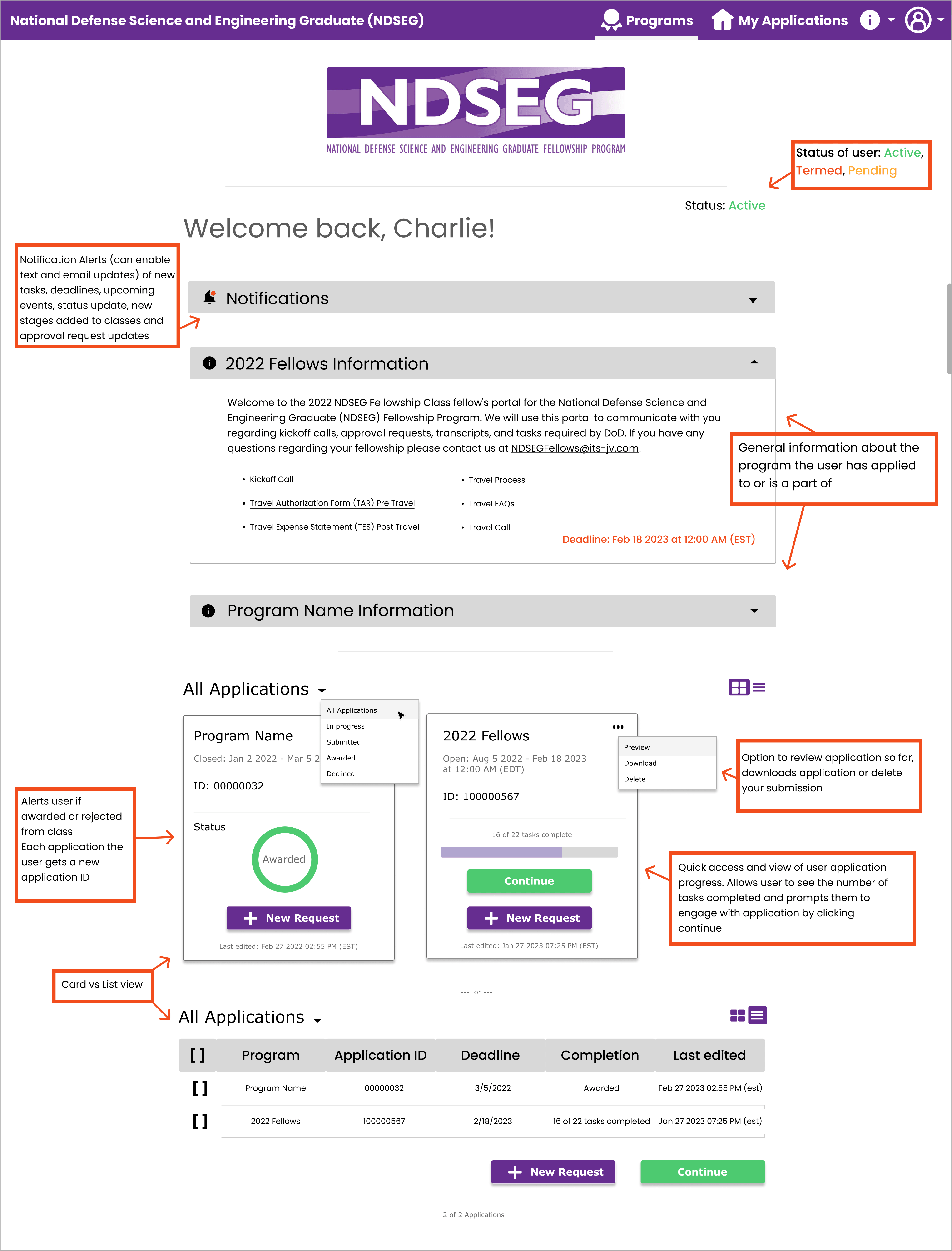
Applicant dashboard — application status, progress, notifications, and program information.
case study
Making a long application process feel manageable.
Rather than treating the fellowship workflow as one large form, I organized it into visible stages and tasks. Applicants could see progress, deadlines, completion states, notifications, and save work before submission. This gave both applicants and administrators a clearer understanding of where each application stood.
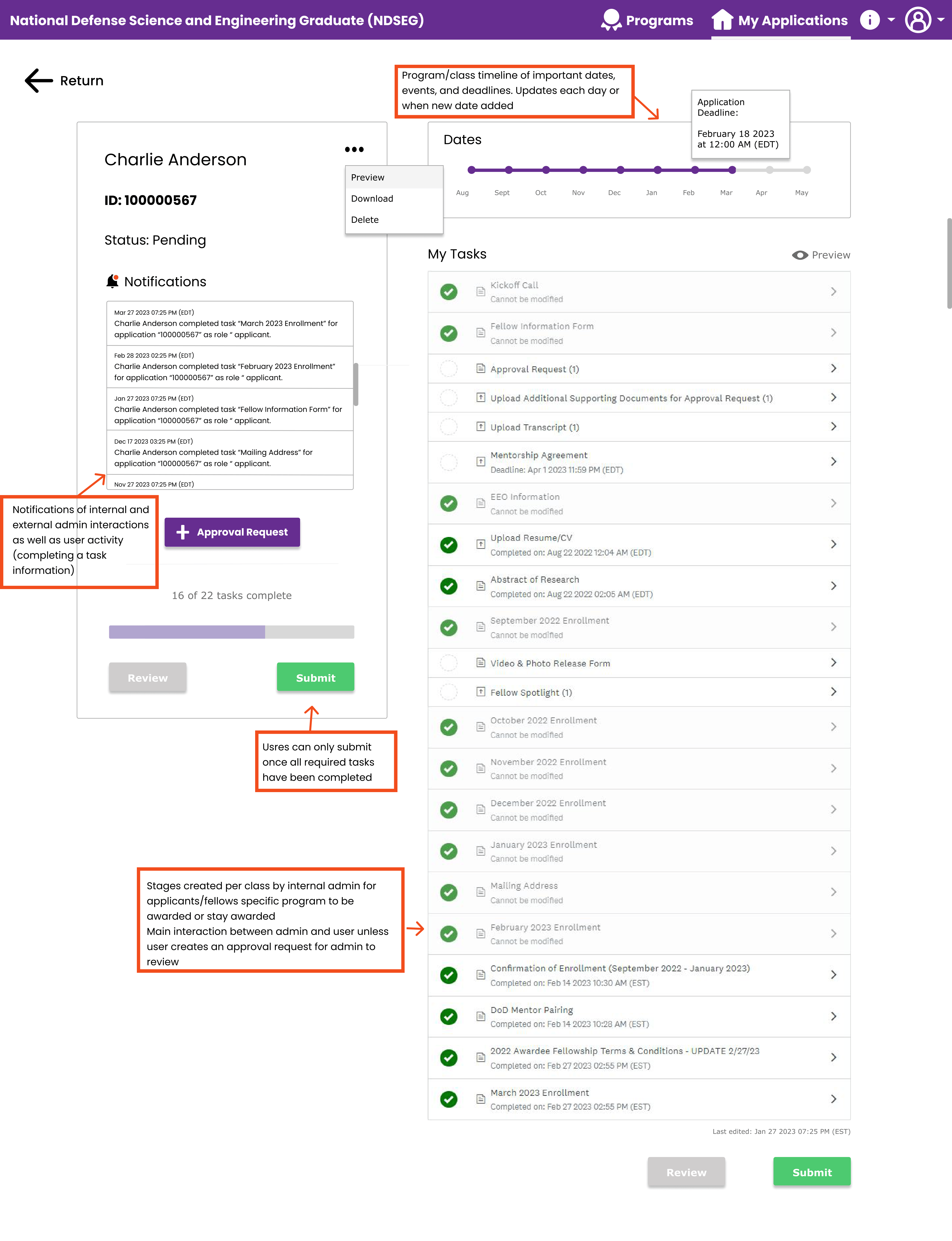
Applicant task workflow — completion states, deadlines, notifications, and submission progress.
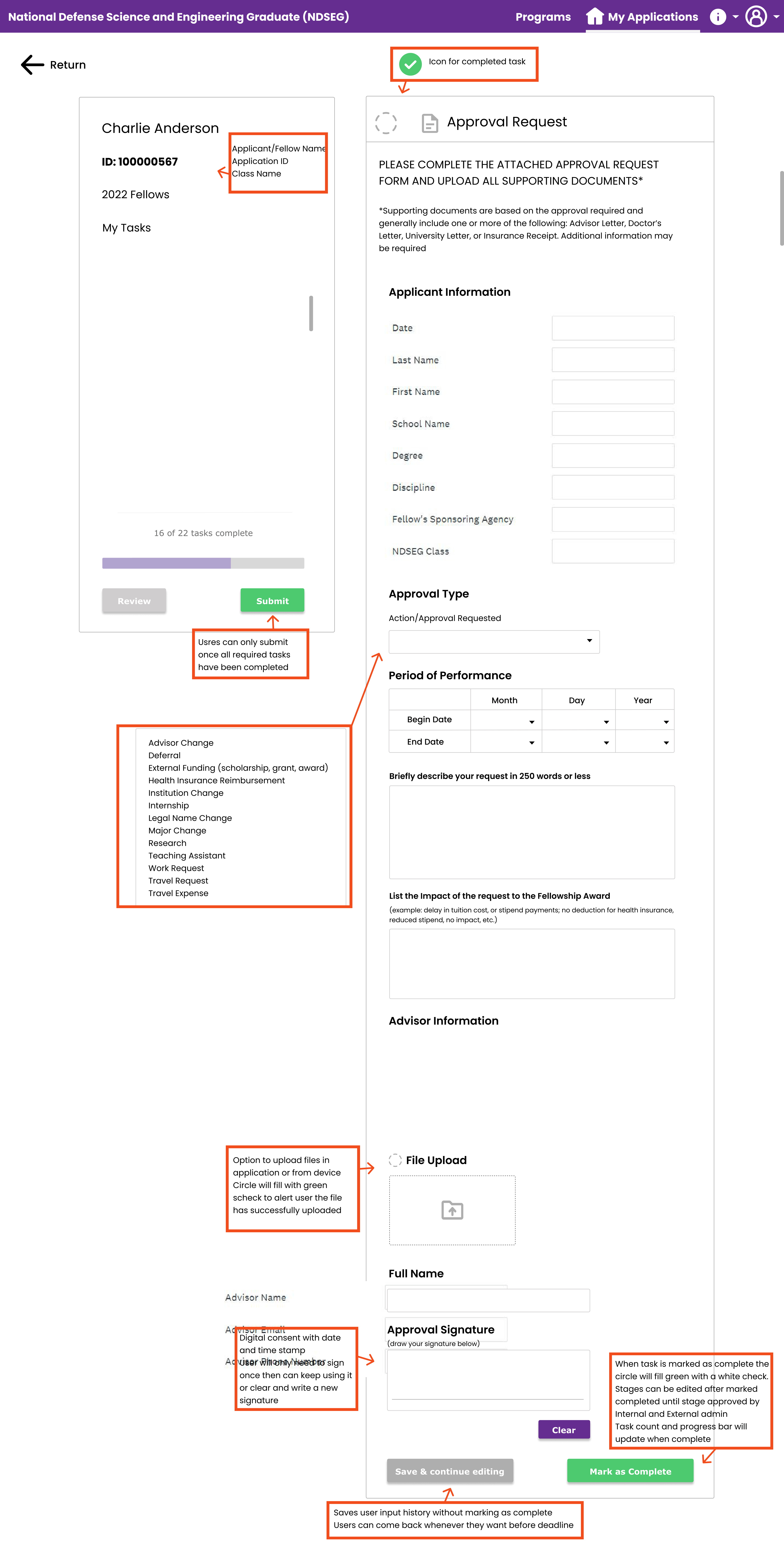
Approval request workflow — supporting documents, saved progress, and review states.
case study
Award wasn't the end of the journey.
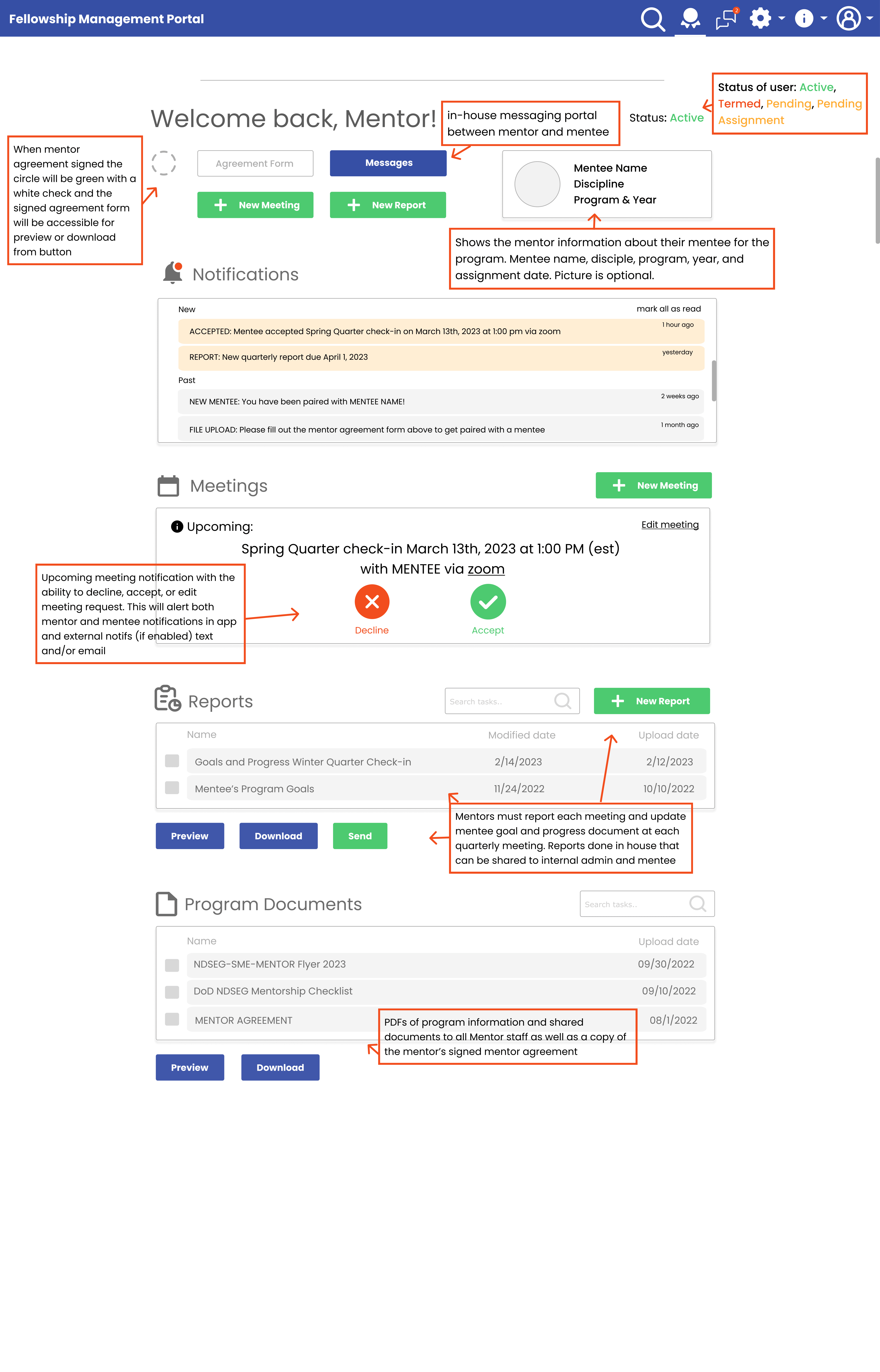
The system extended beyond application and award into post-award fellowship management. I designed workflows for mentor assignment, meetings, reports, program documents, notifications, and mentor-mentee communication so the platform could support fellows after selection.
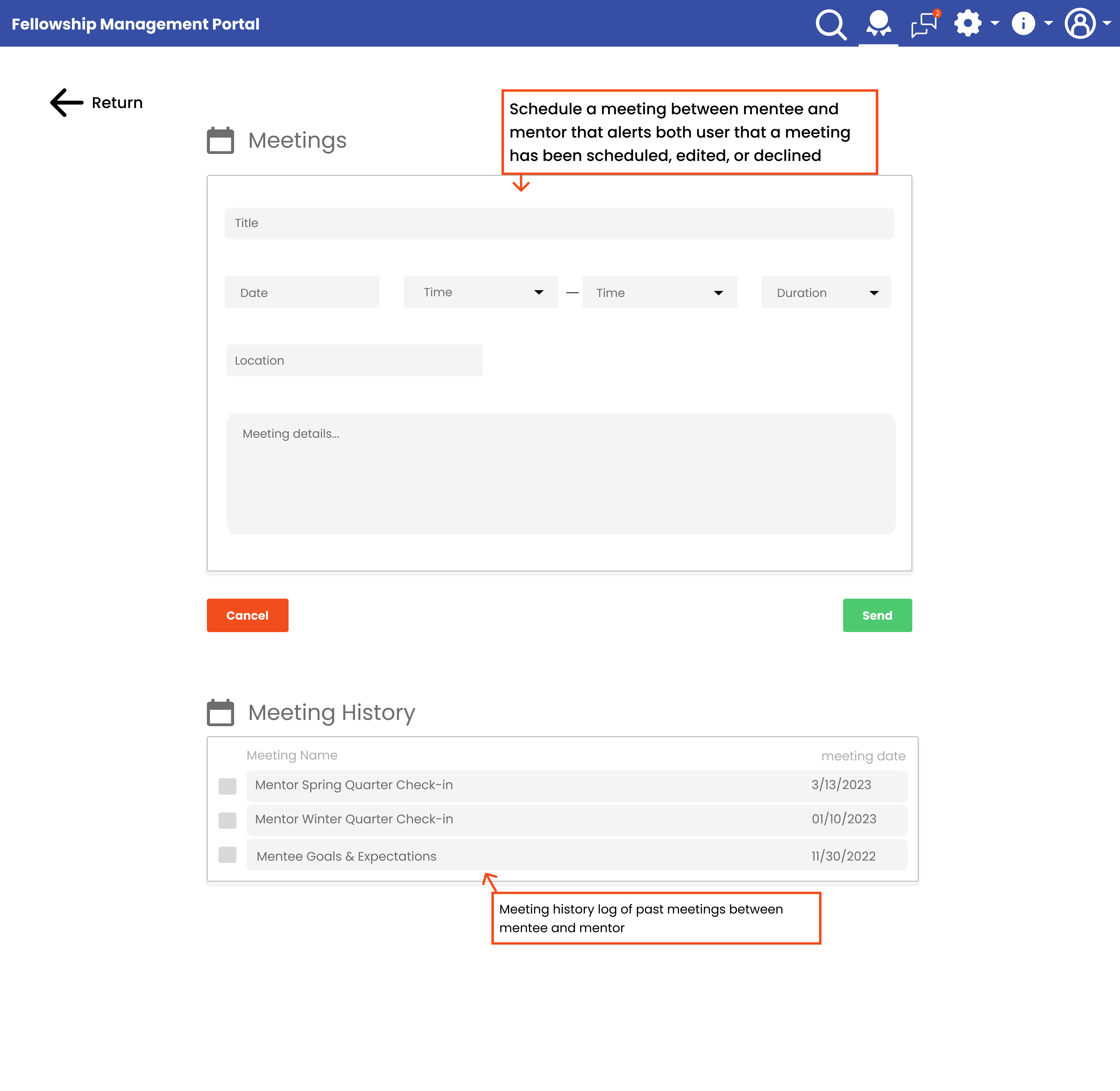
Mentor and fellow communication suite — meetings, reports, documents, and messaging.
case study
The final system concept.
The final design connected program administration, applicant management, review workflows, communication, and post-award support into one unified platform concept.
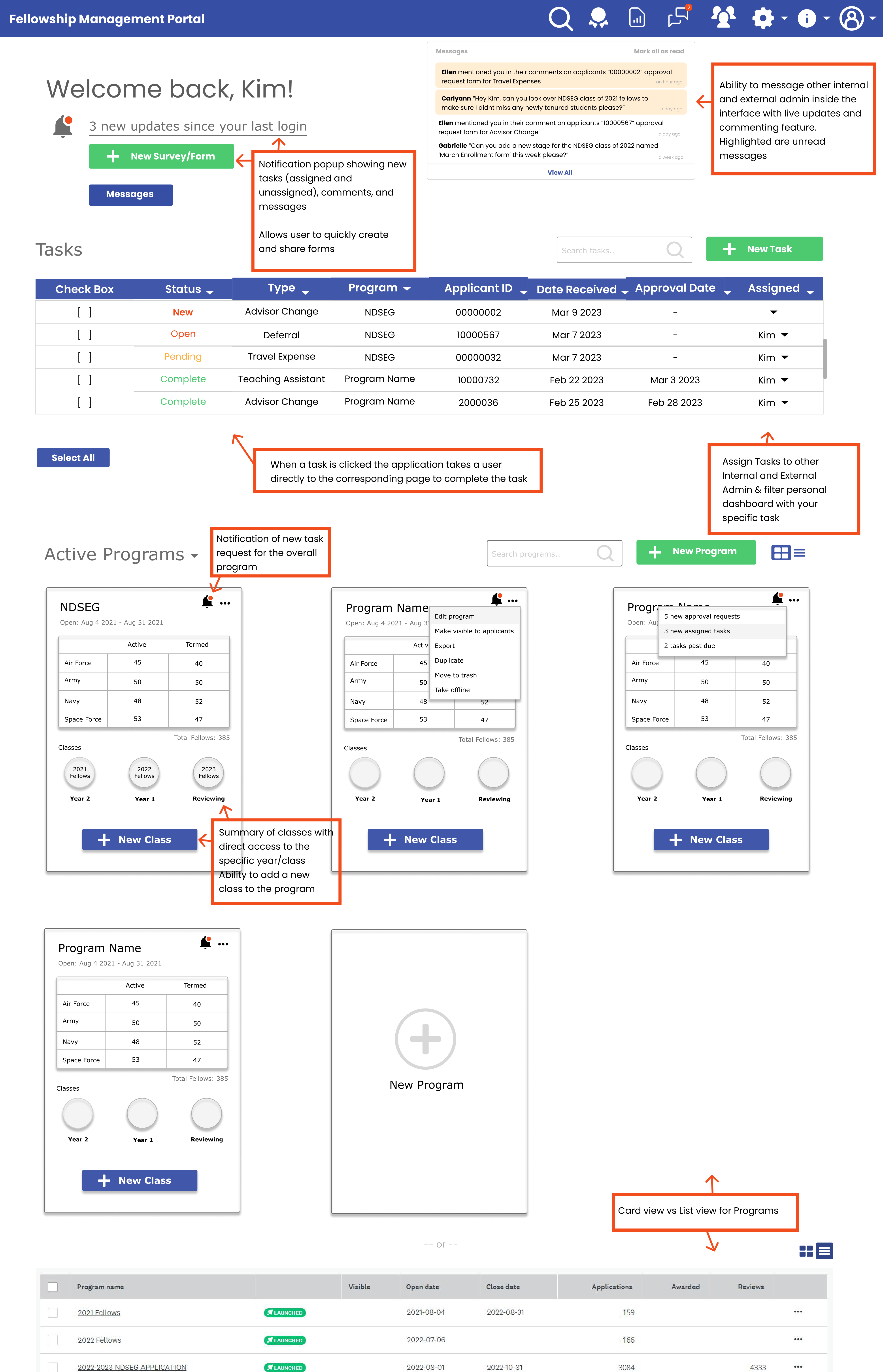
Program administration dashboard — tasks, active programs, review progress, and applicant status.
case study
Outcome
The final Figma prototype and supporting design documentation were delivered as part of STI-TEC's federal contract proposal. The work defined an end-to-end product vision spanning application intake, review, award management, fellow tracking, communication, and mentorship. The contract was ultimately not awarded, so the proposed platform did not proceed to production.
case study
Designing while the requirements were still being discovered.
This project taught me that complex systems rarely arrive with complete requirements. Each design review surfaced new roles, dependencies, and edge cases. Rather than treating those discoveries as scope changes, I used them to refine the information architecture and make each iteration more representative of how the fellowship program actually operated.
timeline